
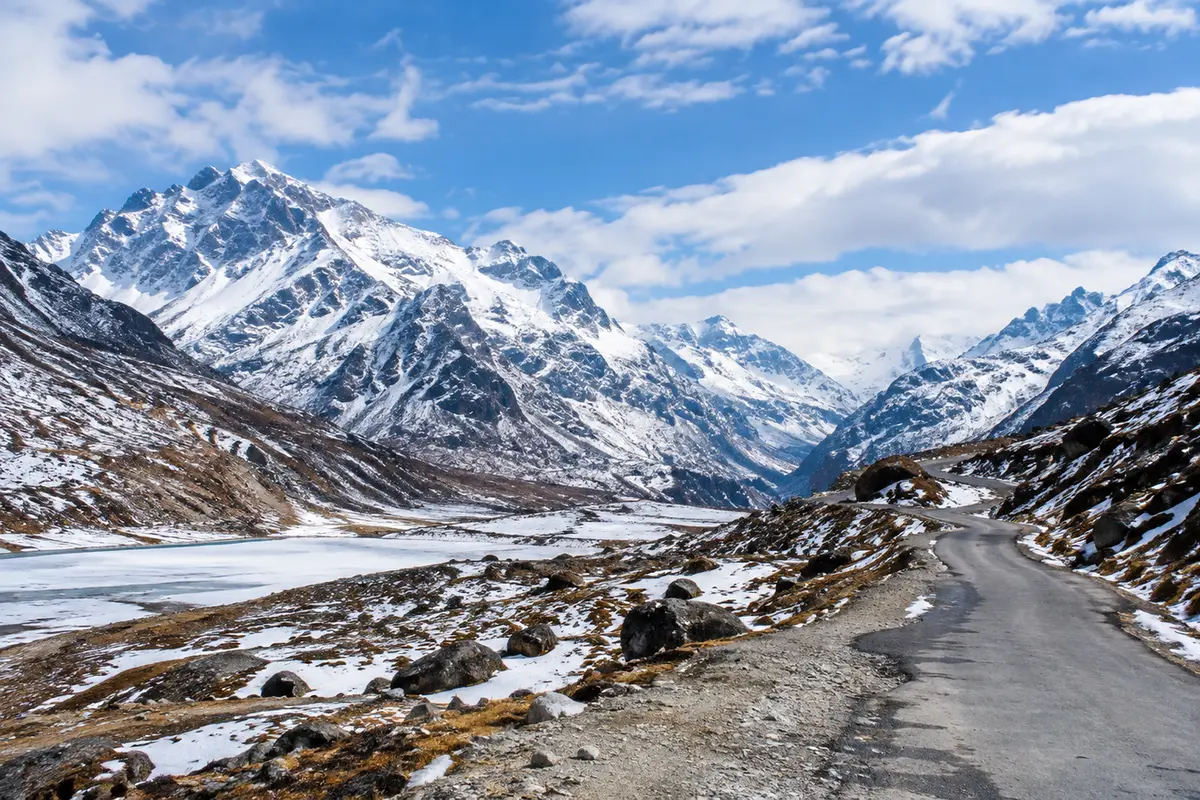
Zero Point, also known as Yumesamdong, is one of the most spectacular high-altitude destinations in North Sikkim. Located beyond Yumthang Valley, this remote mountain destination is known for snow-covered landscapes, rugged Himalayan terrain, dramatic mountain views and a road that takes travellers close to the Indo-Tibetan border.
Unlike the more accessible sightseeing destinations around Gangtok, a trip to Zero Point requires more planning. The route falls within a protected area, so visitors need the necessary permit and must travel according to the prevailing regulations and road conditions. The journey is generally planned from Lachung, with Yumthang Valley forming an important stop on the way. Sikkim Tourism lists Yumesamdong among the North District destinations covered by Protected Area Permits.
If you are planning a North Sikkim trip that includes Lachung, Yumthang Valley and Zero Point, this guide covers the essential information you need before travelling, including how to reach, permits, best time, weather, route, sightseeing experience, safety considerations, costs and practical travel tips.
For travellers looking for a complete package instead of arranging every part separately, you can also explore the North Sikkim Tour Package from Kolkata – 5 Nights 6 Days.
What Is Zero Point?
Zero Point is the popular tourist name for Yumesamdong, a high-altitude destination located beyond Yumthang Valley in North Sikkim. It is one of the highest accessible tourist points on the Lachung side of the North Sikkim circuit.
The landscape changes considerably as the road climbs beyond Yumthang. Green valleys gradually give way to barren mountain slopes, rocky terrain, snow-covered stretches and wide open Himalayan views. During colder months, snow can cover large sections of the landscape, creating the white scenery for which Zero Point is particularly famous.
The name “Zero Point” is commonly associated with the end of the civilian motorable road in this direction. However, visitors should not interpret it as a literal geographical “zero point” or an unrestricted border-crossing location. The area is close to a sensitive international border and travel is controlled through permits and local regulations.

For the latest permit requirements, it is useful to check the North Sikkim Permit Guide 2026 before your trip.
Why Is This Place Famous?
Zero Point is primarily known for its combination of altitude, snow and remote Himalayan scenery.
Unlike a conventional tourist attraction with monuments or a large commercial area, the experience here comes from the landscape itself. The winding mountain road, distant snow peaks, exposed slopes and changing weather create a very different experience from the greener lower valleys of Sikkim.
Another reason travellers include Zero Point in their North Sikkim itinerary is its location beyond Yumthang Valley. This allows visitors to experience two contrasting landscapes during the same excursion: the broad alpine scenery of Yumthang followed by the colder and more rugged terrain around Yumesamdong.
If you are planning the wider circuit, reading the Yumthang Valley Travel Guide alongside this guide will help you understand how the two destinations fit together.
Where Is It Located?
Zero Point is located in the North Sikkim region beyond Yumthang Valley, on the route from Lachung towards Yumesamdong.
Lachung acts as the practical base for visiting both Yumthang and Zero Point. Travellers generally stay overnight in Lachung and leave early for the excursion, depending on the permitted itinerary, weather and road conditions.
The destination is situated at a very high elevation, commonly quoted at around 15,000 feet above sea level. At this altitude, conditions can change quickly, and the temperature can feel considerably colder than in Gangtok or even Lachung.
Because of the altitude and sensitive location, Zero Point is not a destination where travellers should plan an independent self-drive excursion.
How to Reach Zero Point from Lachung
The usual route to Zero Point begins from Lachung. Travellers first travel through the Yumthang Valley area before continuing towards Yumesamdong.
The journey is not simply about covering a fixed number of kilometres. Mountain roads can be slow because of bends, narrow sections, road conditions, traffic restrictions and weather-related changes.
A typical route follows:
Lachung → Yumthang Valley → Yumesamdong / Zero Point
The road itself is one of the highlights of the experience. As you move higher, vegetation becomes increasingly sparse and the landscape becomes more dramatic.
Since North Sikkim road conditions can change because of snowfall, landslides or other local factors, the actual accessibility of Zero Point should always be confirmed before travelling.

If you are planning the entire journey from Kolkata, the How to Reach North Sikkim from Kolkata guide can help you understand the journey from Kolkata to NJP/Bagdogra, Gangtok and onward to North Sikkim.
Travel from Lachung to Zero Point
Most travellers visit Zero Point as an excursion from Lachung rather than staying there overnight.
An early departure is generally preferred because it allows enough time for the excursion and provides better flexibility if the road is slow. Your driver or local travel operator can also advise you about the day’s road conditions and the areas currently accessible.
The route beyond Yumthang is particularly sensitive to weather. Heavy snowfall, ice or road damage can affect access, so an advertised itinerary should never be treated as a guarantee that the road will remain open on a particular day.
For a broader understanding of the base village, see the Lachung Travel Guide.
Zero Point Sikkim Permit Requirements
A permit is required for visiting Zero Point because Yumesamdong lies within a protected area of North Sikkim. Sikkim Tourism specifically lists Yumesamdong among the North District destinations for which Protected Area Permit arrangements apply.
For domestic tourists, the permit is generally arranged through the appropriate travel channel and authorities. Sikkim Tourism states that protected-area travel involves registered travel agencies and designated permit authorities.
A government notification issued in September 2025 also stated that permits for the Lachung, Yumthang and Zero Point route must be issued at least one day in advance and that same-day permits would not be issued under that advisory. It also required tourists visiting Lachung to follow the specified itinerary.
Because permit rules and operational conditions can change, travellers should verify the current requirements before departure rather than relying on an old checklist.
Your permit documents may need identity documents and photographs depending on the applicable rules. For a detailed explanation, refer to the North Sikkim Permit Guide 2026.
Best Time to Visit Zero Point Sikkim
The best time to visit Zero Point depends largely on what kind of landscape you want to experience.
Spring and early summer can offer a combination of comparatively accessible roads, clear mountain scenery and the colourful landscapes around Yumthang. Winter, on the other hand, can bring a much stronger snow experience, but accessibility becomes more weather-dependent.
A broad seasonal overview looks like this:
| Season | What You May Experience | Important Consideration |
| March–April | Snow in higher areas, changing landscapes | Cold conditions and variable road access |
| May–June | Better chance of accessible roads and greener lower valleys | Weather can still change quickly |
| July–August | Rain, cloud and unstable mountain conditions | Landslides and road disruptions can affect travel |
| September–November | Clearer mountain views and crisp weather | Conditions can become cold at high altitude |
| December–February | Snow-covered landscape and freezing conditions | Heavy snow may restrict access |
These are general seasonal patterns rather than guarantees. High-altitude weather and road conditions can change from one day to another.

For a more detailed seasonal comparison, read the Best Time to Visit North Sikkim guide.
Zero Point Sikkim Weather and Temperature
Weather at Zero Point is considerably colder and more unpredictable than at lower elevations of Sikkim.
The high altitude means that temperatures can drop sharply, especially during early mornings, winter months and periods of snowfall. Strong winds can also make the temperature feel lower than the actual reading.
Even if the weather feels comfortable when you leave Lachung, conditions can be completely different after climbing towards Yumesamdong.
Visitors should therefore dress for high-altitude cold rather than relying on the weather in Gangtok or Siliguri.
The North Sikkim Weather Guide 2026 provides a broader overview of seasonal weather patterns across the region and can be useful when planning the entire circuit.
What to Expect on the Zero Point Journey
The journey to Zero Point is an experience in itself.
After leaving Lachung, the road gradually enters a landscape where vegetation becomes less dense and the mountains become increasingly exposed. The Yumthang section is comparatively open and valley-like, while the route towards Yumesamdong feels more rugged and remote.
Depending on the season, you may see:
- Snow-covered mountain slopes
- Frozen or partially frozen streams
- Rocky Himalayan terrain
- Wide open valleys
- Snow along the roadside
- High-altitude mountain peaks
- Small patches of vegetation surrounded by barren slopes
Road conditions can also be uneven. The purpose of the journey is therefore not simply to reach a point on the map but to experience one of the most remote-looking tourist landscapes in North Sikkim.
Places to See Around Zero Point
Zero Point is usually combined with other attractions on the Lachung side of North Sikkim rather than visited as an isolated destination.
The main places associated with this route include:
Yumthang Valley
Yumthang Valley is one of the most important attractions on the route to Zero Point. Known for its broad alpine landscape and seasonal flowers, it provides a dramatic contrast to the more barren terrain found higher up.
During favourable conditions, the valley can appear green and colourful, while snow can transform the landscape during colder months.

The Yumthang Valley Travel Guide covers the valley in greater detail.
Lachung
Lachung is the main overnight base for the Yumthang and Zero Point excursion.
The village itself is surrounded by mountains and offers a quieter Himalayan setting compared with Gangtok. Travellers usually stay here before heading towards the higher destinations the following morning.

You can learn more about accommodation, route conditions and the village experience in the Lachung Travel Guide.
Other North Sikkim Attractions
A North Sikkim trip can include several other destinations depending on the itinerary, permits and current accessibility.
Gurudongmar Lake is located on the Lachen side of the circuit and is generally planned separately from the Lachung–Yumthang–Zero Point route.
For a broader overview of attractions, see Places to Visit in North Sikkim.
How Many Days Do You Need for Zero Point?
Zero Point itself does not usually require a separate overnight stay.
Most travellers visit it as part of the Lachung section of a multi-day North Sikkim itinerary. A common structure includes travelling to Lachung, staying overnight and then visiting Yumthang and Zero Point before continuing according to the approved route.
If you want to combine Zero Point with Gurudongmar Lake and other major North Sikkim attractions, a longer itinerary is more practical.
The North Sikkim 5 Nights 6 Days Itinerary can help you understand how Lachung, Lachen, Yumthang and Gurudongmar Lake can be arranged within a structured trip.
For travellers arriving from Kolkata, the North Sikkim Tour Package from Kolkata – 5 Nights 6 Days follows a planned North Sikkim circuit with Gangtok, Lachen, Gurudongmar Lake, Lachung, Yumthang Valley and the return journey.
Zero Point Sikkim Tour Cost
The cost of visiting Zero Point depends on the overall North Sikkim travel arrangement rather than simply the entrance to the destination.
Your total expense can vary depending on:
- Number of travellers
- Private or shared vehicle
- Number of nights
- Hotel or homestay category
- Season of travel
- Permit arrangements
- Transport from Gangtok
- Food and accommodation inclusions
- Additional local expenses
Because Zero Point is generally visited as part of a Lachung excursion, it is better to calculate the cost as part of your complete North Sikkim trip.
For a detailed breakdown, see North Sikkim Tour Cost from Kolkata 2026.
What to Carry for the Trip
Packing properly becomes especially important because of the altitude and cold conditions.
Carry several warm layers rather than depending on one heavy jacket. Thermal wear, a warm jacket, gloves, woollen socks and a cap can be useful, particularly during winter and early morning travel.
A practical packing list includes:
- Warm layered clothing
- Thermal innerwear
- Gloves
- Woollen socks
- Comfortable waterproof shoes
- Sunglasses
- Sunscreen
- Lip balm and moisturiser
- Personal medicines
- Water bottle
- Snacks
- Valid identification documents
- Required permit documents
Snow can reflect strong sunlight, so sunglasses and sunscreen remain useful even when the temperature is very low.
Avoid carrying unnecessary luggage for the high-altitude excursion. Keep essential items easily accessible inside the vehicle.
High-Altitude Travel Tips for Zero Point
Zero Point is a high-altitude destination, so travellers should take the conditions seriously.

Do not rush immediately after reaching the higher sections of the route. Walk slowly and avoid unnecessary physical exertion. If you experience severe headache, dizziness, nausea, unusual breathlessness or other concerning symptoms, inform your driver or travel operator immediately and follow local medical advice.
It is also important to stay hydrated without forcing excessive amounts of water.
Travellers should avoid treating oxygen cylinders or other emergency equipment as a substitute for proper medical care. If someone develops serious altitude-related symptoms, descending to a lower elevation may be necessary.
The journey should also be planned with enough flexibility because mountain weather can change quickly.
Is It Safe for Tourists?
Zero Point is a regularly visited tourist destination on the North Sikkim circuit, but it is not a conventional low-altitude sightseeing spot.
Safety depends heavily on weather, road conditions, permit restrictions and responsible travel.
Travellers should:
- Follow the permitted route
- Listen to the local driver and authorities
- Avoid walking beyond designated tourist areas
- Never attempt to cross restricted or military-controlled areas
- Avoid travelling independently on unfamiliar mountain roads
- Check road and weather conditions before departure
- Keep enough warm clothing
- Follow instructions during snowfall or poor visibility
Sikkim Tourism specifically advises visitors to respect protected areas and travel only within the areas specified by their permits.
Zero Point for Families, Couples and First-Time Visitors
Zero Point can be included in a North Sikkim trip for families, couples and groups, provided everyone is prepared for the altitude and road journey.
For families travelling with children or older adults, the high elevation and cold weather should be considered carefully. The trip may involve long hours in a vehicle and limited facilities at higher elevations.
Couples and younger travellers often enjoy Zero Point because of its dramatic landscapes and photography opportunities, but the destination should still be approached as a high-altitude excursion rather than a casual sightseeing stop.
First-time visitors should preferably travel through an organised North Sikkim route where the permit, vehicle and accommodation arrangements are properly coordinated.
Zero Point vs Yumthang Valley
Although Zero Point and Yumthang Valley are often mentioned together, they offer different experiences.
Yumthang is known for its wide valley, river, seasonal flowers and comparatively softer landscape. Zero Point is higher, colder and more rugged, with snow and exposed Himalayan terrain being major attractions.
The two destinations work well together because the scenery changes significantly as you travel from one to the other.
If your main interest is flowers, meadows and valley scenery, Yumthang may be the more visually diverse experience. If you are looking for snow and high-altitude Himalayan landscapes, the journey towards Zero Point offers a different experience.
Zero Point in a North Sikkim Itinerary
For most travellers, Zero Point should be treated as one part of a larger North Sikkim circuit.
A typical route may look like:
Gangtok → Lachen → Gurudongmar Lake → Lachung → Yumthang Valley → Zero Point → Gangtok
The exact order, overnight stays and accessibility can change according to permits, road conditions and local travel regulations.

The Lachen Travel Guide is useful for understanding the Lachen side of the circuit, while the Gurudongmar Lake Travel Guide covers the high-altitude lake in greater detail.
This combination gives travellers a clearer picture of why a North Sikkim trip usually requires several days rather than a single excursion from Gangtok.
Frequently Asked Questions About Zero Point Sikkim
Is Zero Point and Yumesamdong the same place?
Yes. Yumesamdong is the official/local name commonly associated with the destination that tourists refer to as Zero Point.
Do I need a permit to visit Zero Point?
Yes. Yumesamdong falls within the protected areas of North Sikkim, so the required Protected Area Permit must be arranged according to the prevailing rules.
Can I visit Zero Point without staying in Lachung?
In normal tourist itineraries, Lachung is the practical base for visiting Yumthang and Zero Point. The excursion is generally arranged from Lachung rather than as an independent trip from Gangtok.
Can I drive my own car to Zero Point?
Independent self-drive travel should not be assumed to be permitted. North Sikkim protected-area travel is regulated, and travellers should use the vehicle and travel arrangements allowed under the current permit and local regulations.
Does Zero Point always have snow?
No. Snow conditions vary by season and weather. Winter usually provides the strongest possibility of extensive snow, but actual conditions can change from year to year.
Is Zero Point open throughout the year?
Accessibility can change because of snowfall, road conditions, weather and administrative restrictions. Always confirm the current status before travelling.
Is Zero Point higher than Yumthang Valley?
Yes. Zero Point is located at a substantially higher elevation than Yumthang Valley, which is why the temperature and landscape can change noticeably between the two destinations.
How far is Zero Point from Lachung?
The road distance is commonly described as a relatively short mountain excursion compared with the journey from Gangtok, but actual travel time depends heavily on road conditions, stops, weather and traffic restrictions. It is better to plan by travel time rather than relying only on a kilometre figure.
What should I wear at Zero Point?
Wear multiple warm layers, thermal clothing, a winter jacket, gloves, warm socks and suitable shoes. Sunglasses and sunscreen are also useful at high altitude.
Can I visit Zero Point with Yumthang Valley?
Yes. Yumthang Valley and Zero Point are commonly visited together because both lie on the Lachung–Yumesamdong route. The exact sightseeing sequence depends on the approved itinerary and current road conditions.
Final Thoughts
Zero Point Sikkim is a remarkable high-altitude destination where snow-covered mountains, rugged Himalayan landscapes and changing weather create an unforgettable travel experience. Located beyond Yumthang Valley, Yumesamdong offers a very different atmosphere from the greener and more accessible parts of Sikkim.
However, visiting Zero Point requires more than simply reaching a scenic viewpoint. Permits, road conditions, weather, altitude and local travel regulations all need to be considered before starting the journey. Travelling with a properly planned itinerary also makes it easier to enjoy the route without rushing through its major attractions.
With the right preparation, warm clothing and a flexible travel plan, a Zero Point Sikkim trip can become one of the most memorable experiences of a North Sikkim journey.
Plan Your North Sikkim Journey with JT Tourism
Ready to explore the breathtaking landscapes of Zero Point, Yumthang Valley and North Sikkim? Let JT Tourism help you plan a comfortable and well-organised Himalayan journey with suitable transportation, accommodation and travel arrangements.
Whether you are travelling as a couple, family or group of friends, our team can help you choose a practical itinerary based on your travel dates, group size and sightseeing preferences. From the journey to North Sikkim to the high-altitude experience around Lachung and Zero Point, every important part of your trip can be planned in advance.
Explore our North Sikkim Tour Package from Kolkata – 5 Nights 6 Days and plan your Himalayan getaway with a structured itinerary designed for a smoother and more convenient travel experience.
Plan your Zero Point Sikkim trip with JT Tourism today and turn your North Sikkim travel plans into a memorable Himalayan experience.
Start Planning Your Zero Point Sikkim Trip
Have questions about the itinerary, permits, travel dates or package details? Get in touch with JT Tourism for personalised assistance and trip planning.