
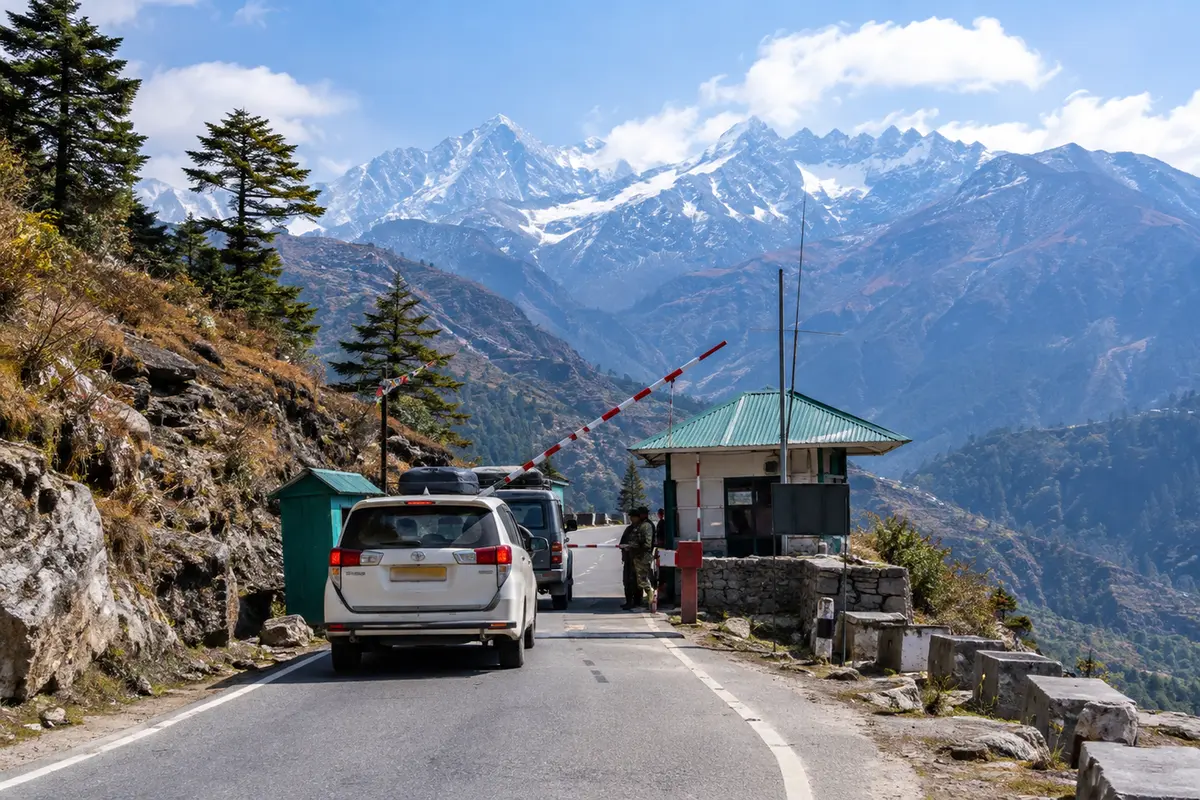
Planning a trip to Lachen, Lachung, Yumthang Valley or Gurudongmar Lake? Understanding the North Sikkim permit requirements is one of the most important steps when preparing for your journey. Unlike regular tourist destinations in Sikkim, several areas of North Sikkim fall within protected border regions. Therefore, travellers cannot visit these destinations without obtaining the required permission.
For Indian travellers, a Protected Area Permit (PAP) is required to enter designated protected areas beyond the regular tourist circuit. Foreign nationals have additional Restricted Area Permit (RAP) and PAP requirements, while certain North Sikkim destinations have specific restrictions on foreign visitors.
The permit process is generally handled through authorised local travel agencies or tour operators rather than through a simple walk-in application. Travellers may need to submit identification documents, photographs, route details and travel dates before starting their journey.
If you are planning to explore these destinations together, you can also check our North Sikkim Tour Package from Kolkata – 5 Nights 6 Days to understand how permit-controlled locations fit into a complete travel itinerary.
This guide explains the North Sikkim permit process in simple terms, including who needs a permit, required documents, application procedures, important travel rules, restrictions for foreign nationals, common mistakes and useful 2026 travel tips.
Why Do You Need a Permit for North Sikkim?
North Sikkim is not an ordinary open tourist destination. Several areas are located close to India’s international borders and are therefore classified as protected regions.
The permit system allows authorities to regulate tourist movement in sensitive border areas, maintain security, manage traffic and control access during challenging weather conditions or road disruptions.
Popular destinations such as Lachen, Gurudongmar Lake, Lachung, Yumthang Valley and Yumesamdong (Zero Point) fall within the protected North Sikkim travel corridor. The exact areas covered by a permit depend on the approved route and the destinations mentioned in the travel application.
This means that permission to visit one part of North Sikkim does not automatically allow travellers to enter every restricted location. Each destination must be covered by the applicable permit and current administrative approval.

Is a North Sikkim Permit Mandatory for Indian Tourists?
Yes. Indian tourists travelling to designated protected areas of North Sikkim must obtain the applicable Protected Area Permit (PAP).
This requirement is particularly important for travellers planning to visit:
- Lachen
- Gurudongmar Lake
- Thangu and higher-altitude areas along the Lachen route
- Lachung
- Yumthang Valley
- Yumesamdong or Zero Point, subject to current access permissions
- Other protected destinations specifically included in the approved travel route
However, permit requirements and destination access can change because of temporary administrative decisions, security restrictions, road conditions or adverse weather.
Therefore, travellers should not assume that a permit issued for an earlier visit will automatically remain valid for their next journey. Always confirm the current requirements before travelling.
Which Places in North Sikkim Require a Permit?
One of the easiest ways to understand the North Sikkim permit system is to distinguish between regular tourist destinations and protected travel routes.
Gangtok, for example, is a regular tourist base and does not require the same North Sikkim PAP simply to stay within the city. The permit requirement becomes important when travellers enter designated protected routes beyond the regular tourist circuit.
The following table provides a practical overview of permit requirements for popular destinations.
| Destination | Permit relevance | Important note |
| Lachen | PAP required | Access depends on current road and administrative clearance |
| Gurudongmar Lake | PAP required | Indian tourists are permitted subject to current rules |
| Thangu | Protected route | Usually included in the Lachen and Gurudongmar travel circuit |
| Lachung | PAP required | Applicable permit and route conditions must be followed |
| Yumthang Valley | PAP required | Access depends on current route permission |
| Yumesamdong / Zero Point | Protected route | Access depends on applicable permission and current road conditions |
| Gangtok | No North Sikkim PAP simply for city stay | Common starting point before entering protected areas |
The list above should be treated as a travel-planning reference rather than a replacement for the actual permit issued for your journey. Protected-area access can change because of adverse weather, road damage, security requirements or local administrative decisions.

For a better understanding of the sightseeing locations covered by these routes, explore our Places to Visit in North Sikkim guide before finalising your travel plan.
North Sikkim Permit Types Explained
The terminology used for Sikkim permits can sometimes be confusing because different permission categories apply to Indian and foreign travellers.
For most Indian tourists visiting North Sikkim, the main requirement is a Protected Area Permit (PAP).
Foreign nationals face additional entry requirements because Sikkim falls under a Restricted Area Regime. They may need a Restricted Area Permit (RAP), followed by additional permission for eligible protected areas.
Protected Area Permit (PAP)
A Protected Area Permit (PAP) is the main permit associated with designated protected border regions of Sikkim.
In North Sikkim, protected travel routes include the Lachen and Gurudongmar Lake circuit, along with the Lachung, Yumthang Valley and Yumesamdong routes.
The permit specifies the approved travel area and helps authorities regulate tourist movement through sensitive border regions.
Restricted Area Permit (RAP) for Foreign Nationals
Foreign nationals face additional travel restrictions when visiting Sikkim.
According to the applicable Sikkim government guidelines, foreign nationals require a Restricted Area Permit (RAP) to enter Sikkim, while additional protected-area permissions may apply to eligible border destinations.
Not every protected destination is open to foreign visitors. In particular, places such as Gurudongmar Lake have restrictions that differ from those applicable to Indian citizens.
Foreign travellers should therefore never assume that an itinerary available to Indian tourists is automatically permitted for them. They should verify destination-specific eligibility and current entry requirements before making travel arrangements.

Documents Required for North Sikkim Permit
Keeping the required documents ready can make the North Sikkim permit application process much smoother.
For Indian travellers, authorised travel operators generally request valid government-issued photo identification and recent passport-size photographs. However, the exact document requirements may vary depending on the issuing authority and current regulations. Travellers should confirm which identification documents are accepted before submitting their applications.
A practical document checklist includes:
- Valid government-issued photo ID
- Photocopies of the required identification documents
- Recent passport-size photographs
- Child-specific identification or supporting documents, where applicable
- Confirmed travel dates
- Names and details of all travellers
- Planned North Sikkim travel route
- Any additional documents requested by the authorised travel operator or authorities
For foreign nationals, a valid passport and Indian visa documentation are particularly important, along with the documents required for the RAP and applicable PAP process.
Which ID Proof Should Indian Tourists Carry?
This is one area where travellers should be particularly careful.
Different permit-processing sources may mention different accepted identification documents, and requirements can change. Therefore, it is better not to depend on outdated information or random online checklists.
Before departure, confirm with your authorised travel operator which original ID proof and photocopies are currently accepted for the specific North Sikkim permit.
It is also advisable to carry the original identification document throughout the journey because security personnel may verify travellers’ identities at different checkpoints.
How Many Passport Photos Are Needed?
Recent passport-size photographs are commonly requested during permit processing.
Since the exact number may vary according to the current application procedure and traveller category, carrying a few recent photographs per person is a practical precaution.
Make sure the photographs are clear and recent. If your travel operator has already requested them, avoid waiting until you reach Gangtok to arrange the photographs.

How to Apply for a North Sikkim Permit
For most tourists, the easiest way to arrange a North Sikkim permit is through an authorised local travel agency or tour operator.
The Government of Sikkim’s permit guidelines provide for applications through authorised channels, including registered local travel agencies and tour operators, for protected destinations along the North Sikkim routes.
The application process generally follows these steps:
Step 1: Finalise Your North Sikkim Itinerary
First, decide which destinations you want to include in your journey. You may plan a trip towards Lachen and Gurudongmar Lake, Lachung and Yumthang Valley, or a combined North Sikkim circuit.
Before finalising your route, check our North Sikkim 5 Nights 6 Days Itinerary to understand the travel sequence and sightseeing plan.
Step 2: Submit Traveller Details
Provide the required identification documents, recent photographs and personal details of every traveller to your authorised tour operator.
Step 3: Permit Application
The authorised travel agency submits the application through the applicable government or authorised permit-processing system.
Step 4: Administrative and Security Clearance
The application is processed according to current regulations, destination-specific requirements, road conditions and applicable administrative or security clearances.
Step 5: Permit Issuance
Once the application is approved, the permit is issued for the authorised travel route and applicable travel period.
Step 6: Carry the Permit During Your Journey
Always keep the approved permit with you throughout your North Sikkim journey. Do not leave it behind at your hotel or homestay.
Your travel route may include multiple checkpoints where security personnel or local authorities can verify the permit and identification documents.

How Early Should You Apply for a North Sikkim Permit?
Do not leave the North Sikkim permit process until the morning of your journey.
Sikkim authorities have previously specified advance permit issuance requirements for North Sikkim routes, including instructions that same-day permits should not be issued for the Lachung route.
In practice, it is better to submit your documents to the authorised travel operator as early as possible, especially during:
- Peak holiday periods
- Winter snowfall periods
- Long weekends
- Christmas and New Year
- School holidays
- Periods of high tourist demand
Early document submission also gives your operator enough time to resolve potential issues if an ID copy, photograph or traveller detail needs correction.
Can You Get a North Sikkim Permit Yourself?
For ordinary tourists, arranging a North Sikkim permit is generally not as simple as purchasing a regular sightseeing ticket.
The Government of Sikkim identifies registered local travel agencies and tour operators as authorised channels for processing permits for designated protected areas.
That is why North Sikkim trips are commonly organised through registered operators, particularly when the itinerary includes Lachen, Gurudongmar Lake, Lachung or Yumthang Valley.
Trying to arrange everything independently without understanding the current permit procedure can create unnecessary difficulties at the checkpoints.
For travellers coming from Kolkata, understanding the complete journey is equally important before booking. Our guide on How to Reach North Sikkim from Kolkata explains the journey from Kolkata towards NJP or Bagdogra, Gangtok and the onward route to North Sikkim.
North Sikkim Permit Rules for Indian Tourists
Obtaining a permit does not mean that travellers can move freely throughout the region.
Your journey must follow the approved route and destinations mentioned in the permit.
Some important North Sikkim permit rules include:
- Travel only through authorised routes.
- Do not enter restricted areas that are not mentioned or approved in your permit.
- Follow instructions from the police, army and local authorities.
- Carry your permit and original identification documents.
- Follow the approved travel itinerary.
- Respect local environmental and community rules.
- Do not ignore temporary road closures or security instructions.
- Follow official directions when a route is closed because of adverse weather or landslides.
The Government of Sikkim has specifically stated that tourists must remain within the areas mentioned in their permits. Unauthorised travel may attract penalties.
Why Are Lachen and Lachung Important Stops on a North Sikkim Permit Trip?
Lachen and Lachung are two important mountain villages on the North Sikkim travel circuit. They are not just sightseeing destinations; they also serve as overnight stops for travellers visiting nearby high-altitude attractions.
Understanding their locations can help you plan your route and prepare the correct travel details for your permit application.
Lachen – The Base for Visiting Gurudongmar Lake
Lachen is an important overnight stop for travellers planning to visit Gurudongmar Lake. The journey to the lake generally starts early from Lachen because of the long mountain route and high altitude.
Travellers should include the Lachen stay and Gurudongmar sightseeing plan in their itinerary and confirm the applicable permit arrangements with their authorised tour operator.
For more information about the village, accommodation and nearby attractions, read our Lachen Travel Guide.
Lachung – The Base for Visiting Yumthang Valley
Lachung is another important overnight stop on the North Sikkim circuit. Travellers usually stay here before visiting Yumthang Valley, which is known for its mountain scenery, rivers and seasonal flowers.
If your itinerary includes this route, make sure your travel plan clearly mentions the Lachung stay and the intended sightseeing destinations.
You can explore our Lachung Travel Guide to learn more about the village, accommodation options and travel conditions.
Why Can a Permit Be Refused or Delayed?
A permit is not an unconditional guarantee that your journey will take place as planned.
Permit processing or actual travel can be affected by several factors, including:
- Road damage
- Landslides
- Heavy snowfall
- Extreme weather conditions
- Security restrictions
- Administrative orders
- Temporary closure of a destination
- Incomplete documentation
- Changes in the permitted travel route
This is particularly important in North Sikkim because road conditions can change quickly, especially at higher altitudes.
Therefore, even after submitting your documents, keep some flexibility in your travel schedule. Your operator should confirm the latest access conditions before departure.
North Sikkim Permit Rules for Foreign Nationals
Foreign nationals need to be particularly careful when planning a North Sikkim trip.
The entry requirements for foreign visitors are different from those applicable to Indian citizens. Foreign travellers may require a Restricted Area Permit (RAP) to enter Sikkim, along with additional permission for eligible protected areas.
Some destinations have stricter entry restrictions.
For example, foreign tourists cannot automatically follow the same Lachen and Gurudongmar Lake itinerary commonly available to Indian travellers. Gurudongmar Lake has specific restrictions for foreign nationals.
Foreign visitors should therefore provide their nationality and passport details to an authorised travel operator before booking a North Sikkim itinerary.
The operator can then verify whether the requested destinations and travel routes are currently available for that traveller category.
Does the Permit Cover Gurudongmar Lake and Yumthang Valley?
The answer depends on the approved travel route and the permissions issued for your journey.
Gurudongmar Lake belongs to the Lachen side of the North Sikkim circuit, whereas Yumthang Valley is accessed through Lachung.
These are two different sightseeing routes and should not be treated as interchangeable destinations under one unrestricted tourist pass.
If your itinerary includes the Lachen route, your operator needs to arrange the applicable permission for Gurudongmar Lake. You can also explore our Gurudongmar Lake Travel Guide to understand the destination, travel conditions and important visitor considerations.
Similarly, travellers planning the Lachung route should confirm the applicable permission for Yumthang Valley. Our Yumthang Valley Travel Guide provides more information about visiting this popular high-altitude destination.
If your itinerary also includes Zero Point (Yumesamdong), check its separate access conditions with your travel operator, as permission and road availability may depend on current administrative instructions.
Before planning this high-altitude excursion, explore our Zero Point Sikkim Travel Guide for more information about its route, travel conditions and visitor requirements.
Where Should You Stay During a Permit-Based North Sikkim Trip?
Accommodation planning is an important part of a North Sikkim journey, especially when your itinerary includes remote mountain destinations. Travellers usually stay in Gangtok before or after the North Sikkim circuit, while Lachen and Lachung serve as overnight stops for visiting Gurudongmar Lake and Yumthang Valley.
Before finalising your travel arrangements, check the available hotels and homestays along your planned route. Our North Sikkim Hotels & Homestays Guide 2026 can help you understand the accommodation options and choose suitable places to stay during your journey.
Confirm your accommodation arrangements with your authorised tour operator while preparing the itinerary and permit application. Availability and local travel conditions may vary depending on the season.
North Sikkim Permit Cost in 2026
Many travellers search for the exact North Sikkim permit cost, but this requires some clarification.
The permit-related charges should not be confused with the total cost of a North Sikkim trip.
Your overall tour package may include:
- Vehicle charges
- Driver charges
- Accommodation
- Meals
- Local transportation
- Administrative or permit-related charges
- Parking and other route charges
- Applicable government fees
- Travel operator service costs
The actual charges may vary depending on government notifications, route requirements and the services included in your package.
For this reason, travellers should ask their operator for an updated cost breakdown instead of assuming that an amount mentioned in an older travel blog is still applicable.
For a detailed understanding of your overall travel budget, read our North Sikkim Tour Cost from Kolkata 2026 guide.
While permit arrangements are an important part of your North Sikkim trip, choosing a suitable package can make the overall planning process easier. If you are looking for a complete itinerary with accommodation, transportation and permit assistance, explore our North Sikkim Tour Package from Kolkata – 5 Nights 6 Days to understand the planned journey and included services.
Does Weather Affect North Sikkim Permits?
Yes. Weather conditions can directly affect whether a permitted route is actually accessible.
North Sikkim has high-altitude roads, steep mountain terrain and destinations that may experience heavy snowfall, landslides or sudden weather changes.
Even when the permit system is operational, authorities may restrict tourist movement if road or weather conditions become unsafe.
Therefore, travellers should understand the difference between:
- Permit issued: You have received permission to travel along the approved route.
- Route open: The road is currently accessible and travel is allowed.
These two conditions are not always the same.
Before departure, check with your operator for the latest road and destination access updates.

You can also read our North Sikkim Weather Guide 2026 to understand how seasonal conditions can affect visibility, snowfall, road travel and sightseeing.
Best Time to Plan a Permit-Based North Sikkim Trip
There is no single month that guarantees perfect travel conditions in North Sikkim.
Different seasons offer different experiences, and the best travel period depends on your sightseeing preferences and tolerance for changing road conditions.
Spring and early summer can offer relatively pleasant conditions around the lower valleys, while Yumthang Valley is particularly attractive during its flowering season.
Winter brings opportunities to experience snow-covered landscapes but can also increase the possibility of road restrictions and temporary closures.
Monsoon months may bring heavy rainfall, landslides and difficult road conditions, which can affect access to protected destinations.
Therefore, choosing your travel dates should depend not only on the scenery but also on road accessibility and the type of experience you prefer.
Before booking, read our detailed Best Time to Visit North Sikkim guide and confirm the latest route status with your authorised travel operator.
Important North Sikkim Permit Rules to Remember in 2026
Before starting your journey, keep these practical points in mind.
1. Permit and Road Opening Are Different
Having a permit does not automatically mean that every road on your itinerary is open.
Always check the latest road and destination access updates before departure.
2. Same-Day Planning Is Risky
Permit processing may require advance document submission, and government instructions may specify minimum advance periods for particular routes.
Submit your documents early to avoid last-minute complications.
3. Follow the Approved Route
Do not assume that you can add an extra destination after reaching North Sikkim.
If a location is not included in your authorised travel route, do not attempt to enter it without the required permission.
4. Carry Original Documents
Photocopies are useful during permit processing, but original identification documents may also be required for verification at checkpoints.
5. Keep Your Itinerary Flexible
Snowfall, landslides, road repairs and administrative restrictions can affect North Sikkim travel even after your permit has been issued.
6. Check Rules Before Departure
Permit regulations and access conditions can change throughout the year. A travel guide published several months earlier may not reflect the latest instructions.
Common Mistakes Travellers Make With North Sikkim Permits
A little preparation can prevent many avoidable problems during your journey.
One common mistake is assuming that North Sikkim works like ordinary Gangtok sightseeing. It does not, because several destinations fall within designated protected areas.
Another mistake is submitting unclear ID copies, outdated photographs or incomplete traveller details.
Some travellers also book accommodation and transportation before confirming whether their intended route is currently accessible.
Others assume that a permit for Lachung automatically allows access to Lachen and Gurudongmar Lake. Similarly, foreign visitors sometimes assume that they can follow the same itinerary as Indian tourists.
Travellers should also avoid making last-minute changes to their sightseeing plans without checking whether additional permission is required.
To avoid these problems, confirm your route, traveller category, documents and current destination access conditions before departure.
North Sikkim Permit Checklist Before Leaving Kolkata
If you are travelling from Kolkata, complete the following checklist before starting your journey:
- Confirm your North Sikkim travel route.
- Check whether Lachen, Gurudongmar Lake, Lachung and Yumthang Valley are currently accessible.
- Submit the required identification documents to your authorised operator.
- Keep recent passport-size photographs ready.
- Confirm the permit application timeline.
- Ask whether any additional government or permit-related charges apply.
- Confirm what is included in your tour package.
- Carry your original identification documents.
- Save digital copies of important travel documents.
- Ask about the latest weather and road conditions.
- Keep some flexibility in case of route changes.
- Never travel beyond the areas authorised in your permit.
If you are planning a 5-night, 6-day journey, make sure your permit arrangements match the complete itinerary rather than treating them as a separate last-minute task.

North Sikkim Permit Guide 2026: Quick Summary
The North Sikkim permit system may initially seem complicated, but the basic principle is straightforward: designated protected border areas require controlled tourist access.
Indian travellers need the applicable Protected Area Permit (PAP) for designated protected North Sikkim routes. Lachen, Gurudongmar Lake, Lachung and Yumthang Valley are among the major permit-controlled destinations.
Foreign nationals have additional Restricted Area Permit (RAP) and PAP requirements, along with destination-specific restrictions.
The safest approach is to submit your documents to an authorised local travel operator in advance, follow the approved itinerary and confirm the latest road and security conditions before departure.
Remember that a permit is only one part of North Sikkim trip planning. Weather, road conditions, travel season, route availability and journey duration are equally important when preparing for a smooth mountain holiday.
Frequently Asked Questions About North Sikkim Permit 2026
Is a permit required for North Sikkim?
Yes. Tourists visiting designated protected areas of North Sikkim need the applicable Protected Area Permit (PAP). This includes routes towards Lachen and Lachung, subject to current administrative rules.
Is a North Sikkim permit required for Indian citizens?
Yes. Indian citizens also need the applicable PAP to visit designated protected areas of North Sikkim. The permit requirements depend on the destinations included in the approved itinerary.
Can I visit Gurudongmar Lake without a permit?
No. Gurudongmar Lake falls within a protected area, so visitors need the appropriate permission. Actual access may also depend on road conditions, weather and current security instructions.
Can foreign nationals visit North Sikkim?
Foreign nationals may visit certain permitted areas of North Sikkim under specific rules and restrictions. They may need additional documentation, and access to some destinations is restricted. Confirm the permitted route before making travel arrangements.
Can foreigners visit Gurudongmar Lake?
Gurudongmar Lake has specific restrictions for foreign nationals. Foreign travellers should not assume that the standard itinerary available to Indian tourists also applies to them. Confirm the latest access rules with the relevant authorities or an authorised travel operator.
Can I apply for the North Sikkim permit online myself?
Permit processing for protected North Sikkim routes is generally arranged through authorised channels, including registered local travel agencies and tour operators. The application procedure may change, so confirm the current process before travelling.
How early should I submit my documents?
Submit your documents as early as possible before your planned journey. Permit processing may require advance submission, and allowing extra time is particularly helpful during peak tourist seasons.
Does a North Sikkim permit guarantee that the road will be open?
No. A permit does not guarantee road accessibility. Snowfall, landslides, heavy rain, security restrictions and administrative orders can affect travel routes even after a permit has been issued.
Is the permit cost included in a North Sikkim tour package?
It depends on the package and the tour operator. Some packages include permit-related processing or applicable charges, while others list them separately. Check the inclusions and exclusions carefully before confirming your booking.
What documents should I carry for a North Sikkim permit?
Indian travellers should generally keep valid government-issued photo identification, the required photocopies and recent passport-size photographs ready. Accepted documents and the exact requirements should be confirmed with the authorised operator handling the permit.
Final Thoughts
Planning a North Sikkim trip requires more preparation than an ordinary hill-station holiday because several popular destinations are located in protected border areas. Arranging the correct permit, preparing the required documents and following the approved travel route are important steps before starting your journey.
Remember that permit regulations and travel access can change depending on weather, security conditions, road accessibility and government instructions. Always check the latest requirements before leaving for North Sikkim and follow the guidance of your authorised travel operator.
With proper preparation, you can spend more time enjoying the mountain landscapes, scenic valleys, winding roads and high-altitude destinations that make North Sikkim a memorable Himalayan experience.
Plan Your North Sikkim Journey with JT Tourism
Planning a North Sikkim holiday involves more than selecting the places you want to visit. From arranging suitable accommodation and private transportation to planning the route and coordinating protected-area permits, proper travel arrangements can make your journey more comfortable and organised.
Whether you want to explore Gurudongmar Lake, Lachen, Lachung and Yumthang Valley or prefer a well-planned itinerary covering the major attractions, JT Tourism can help organise your trip according to your travel dates, group size and requirements.
Explore our North Sikkim Tour Package from Kolkata – 5 Nights 6 Days to understand the itinerary, accommodation arrangements, transportation and overall travel plan.
Ready to Explore North Sikkim?
Let JT Tourism help you plan a memorable Himalayan holiday with suitable travel arrangements, accommodation, transportation and permit assistance. Get in touch with us to discuss your North Sikkim travel plans.