
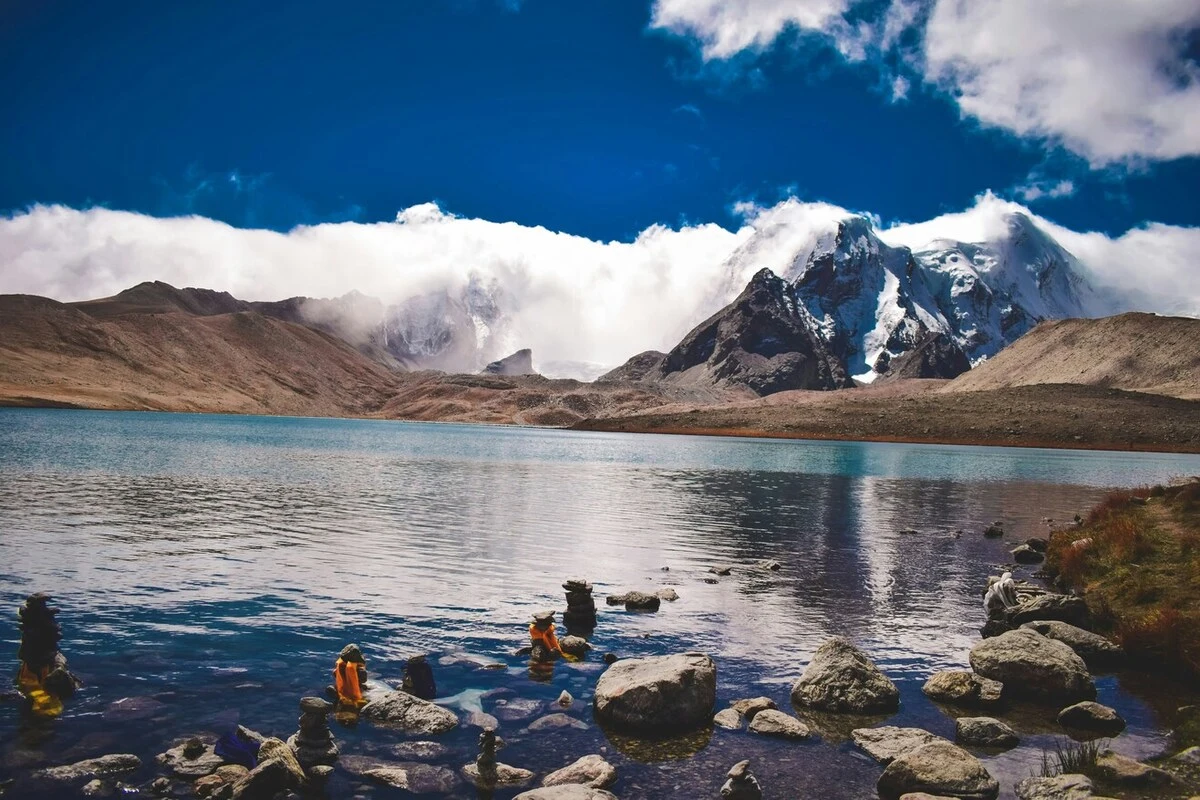
Planning a trip to one of North Sikkim’s most spectacular high-altitude destinations? This Gurudongmar Lake Travel Guide will help you understand what to expect before visiting this remarkable Himalayan lake. Located at around 17,800 feet (5,430 metres), Gurudongmar Lake is surrounded by rugged mountains, vast alpine landscapes and dramatic views that make the journey as memorable as the destination itself. The lake is also considered sacred by Buddhists, Hindus and Sikhs, adding a spiritual dimension to the experience.
However, a trip to Gurudongmar Lake is very different from a regular sightseeing excursion. The extreme altitude, cold weather, restricted-area permits, long mountain drive and changing road conditions all need to be considered before planning the visit. For travellers from Kolkata, the journey usually forms part of a wider North Sikkim circuit covering Gangtok, Lachen, Gurudongmar and Lachung.
If you are planning this journey, this Gurudongmar Lake Travel Guide covers the important details you need to know, including the route, altitude, permits, best time to visit, weather, safety considerations, what to expect at the lake and how to include it in a North Sikkim itinerary.
If you are planning a complete Himalayan journey from Kolkata, our North Sikkim Tour Package from Kolkata – 5 Nights 6 Days offers a convenient way to explore Gurudongmar Lake along with Lachen, Lachung and other major attractions of North Sikkim.
Why Visit Gurudongmar Lake?
Gurudongmar Lake is not simply another scenic stop in Sikkim. Its combination of extreme altitude, sacred significance and remote Himalayan surroundings makes it one of the most distinctive experiences in North Sikkim. A well-planned Gurudongmar Lake Travel Guide can help travellers understand the route, prepare for the altitude and weather, and make the most of their journey to this remarkable Himalayan destination.
The lake is located in the high-altitude region of Mangan district, close to the international border. According to the Mangan district administration, it stands at about 17,800 feet and is regarded as one of the highest lakes in India and the world.
The landscape changes dramatically as the vehicle climbs north from Lachen. Forested mountain scenery gradually gives way to sparse vegetation, rocky slopes, open alpine terrain and snow-covered mountains depending on the season.
For travellers who enjoy Himalayan landscapes, photography and unusual mountain experiences, the journey itself is a major part of the attraction.
What Makes Gurudongmar Lake Special?
Several factors make Gurudongmar different from other popular destinations in Sikkim. This is one of the reasons a Gurudongmar Lake Travel Guide can be helpful before starting the journey, especially for first-time visitors to high-altitude North Sikkim.
One of the Highest Lakes in India
At approximately 17,800 feet, Gurudongmar is located at an altitude where the air is considerably thinner than in Gangtok or Lachen. This high elevation is one of the defining characteristics of the destination.
The altitude also explains why the landscape around the lake looks so different. Tall forests disappear and are replaced by a much more open, rugged Himalayan environment.
A Sacred Himalayan Lake
Gurudongmar Lake has religious significance for multiple communities. It is associated with Guru Padmasambhava, also known as Guru Rinpoche, who is traditionally believed to have visited the region. The lake is also revered by Sikh and Hindu communities.
Visitors should therefore treat the lake and its surroundings respectfully and avoid disturbing the natural or spiritual character of the area.
Dramatic High-Altitude Landscape
The final approach to Gurudongmar offers a completely different visual experience from the greener valleys of lower Sikkim. Depending on the season and weather, travellers may see snow-covered mountains, frozen water, rocky high-altitude terrain and wide open valleys.
This contrast is one reason Gurudongmar is often included in a longer North Sikkim trip rather than visited as an isolated destination.

For a broader understanding of the region, you can also explore our guide to Places to Visit in North Sikkim, which covers the major attractions that can be combined with Gurudongmar Lake.
Where Is Gurudongmar Lake Located?
Gurudongmar Lake is located in North Sikkim in the Mangan district, close to the international border. The lake lies approximately 5 km south of the Tibet border and is reached by road through Lachen and Thangu.
Lachen is the important overnight base for the Gurudongmar journey. Travellers generally reach Lachen first and continue towards higher-altitude areas such as Thangu before reaching the lake.
This makes Lachen an important part of the trip rather than simply a transit point.
If you are unfamiliar with the destination, reading our Lachen Travel Guide before your trip can help you understand the village, accommodation, route and what to expect before the early-morning journey to Gurudongmar.
How to Reach Gurudongmar Lake
The usual road journey follows the route:
Gangtok → Mangan → Chungthang → Lachen → Thangu → Gurudongmar Lake
The final section is a high-altitude mountain journey and should not be treated like an ordinary road trip. Road conditions can change with snowfall, rainfall, landslides, ice and other local factors.
Travellers arriving from Kolkata normally reach Sikkim through NJP, Siliguri or Bagdogra and continue towards Gangtok before entering North Sikkim. In this Gurudongmar Lake Travel Guide, understanding the route in advance can make it easier to plan the journey and prepare for the long mountain drive.

For the complete journey-planning details, including the initial Kolkata-to-Sikkim route, read our guide on How to Reach North Sikkim from Kolkata.
Why Lachen Is Important on the Route
Lachen is generally used as the overnight base before the Gurudongmar excursion. Staying there gives travellers an opportunity to rest before continuing to much higher elevations.
The road from Lachen towards Gurudongmar passes through high-altitude areas such as Thangu. Because the lake is at approximately 5,430 metres, the change in altitude should be taken seriously.
The exact travel time can vary considerably depending on road conditions, weather, traffic restrictions and permitted travel timings. Your local driver or travel operator should always be followed regarding the day’s departure and route.

Gurudongmar Lake Permit Requirements
Because Gurudongmar is located in a protected and strategically sensitive area, travellers need the appropriate permit before visiting. An important part of this Gurudongmar Lake Travel Guide is understanding the permit requirements before travelling to the restricted high-altitude region.
According to the current Sikkim Tourism Protected Area Permit information, permits for Gurudongmar are issued to domestic tourists through the designated authorities, while applications are generally routed through registered travel agencies. The official checklist for Indian visitors includes a valid Voter ID or Driving Licence and two passport-size photographs. Aadhaar is specifically not listed as an accepted document for the Gurudongmar permit.
Foreign tourists are not permitted to visit Gurudongmar Lake itself under the current Sikkim Tourism guidance, although certain other North Sikkim destinations may be accessible under separate permit rules.
Since permit rules and access conditions can change depending on government notifications, weather and road conditions, travellers should confirm the current requirements before departure.
For a detailed explanation of documents, eligibility and the permit process, see our North Sikkim Permit Guide 2026.
Best Time to Visit Gurudongmar Lake
The best time for Gurudongmar depends on what you want from the journey. Clear mountain views, snow, cold-weather scenery and road accessibility can vary significantly throughout the year. This Gurudongmar Lake Travel Guide can help you choose a suitable travel period by considering weather, snowfall, road conditions and visibility.
Generally, the more practical travel windows are associated with periods when the high-altitude road is accessible and weather conditions are relatively favourable. However, Gurudongmar is a weather-dependent destination, so even during a popular travel season, temporary restrictions or road closures can occur.
Our detailed Best Time to Visit North Sikkim guide explains how different seasons affect the overall North Sikkim experience.
Spring and Early Summer
Spring and early summer can offer a combination of snow in higher areas and improving road conditions. The surrounding landscape may gradually become more accessible as winter conditions ease.
This period can be attractive for travellers who want to experience snow without necessarily travelling during the coldest part of winter.
Monsoon Season
Monsoon requires additional caution. Rainfall can affect roads across the lower and middle sections of the North Sikkim route, while landslides and temporary road disruptions may affect travel plans.
Sikkim Tourism notes that rainfall is substantial during the broader summer monsoon period and that road blockages can occur.
Travellers visiting during this period should keep their itinerary flexible and rely on current local road information.
Autumn
The post-monsoon period can offer clearer mountain views when weather conditions cooperate. The high-altitude landscape also becomes particularly striking under clear skies.
However, temperatures can fall quickly as winter approaches, especially at high elevations.
Winter
Winter brings severe cold and the possibility of extensive snow and ice. The lake and surrounding areas can become extremely cold, and access may be restricted depending on road and weather conditions.
Therefore, winter travel to Gurudongmar should never be planned solely around the expectation of seeing a frozen lake. Actual access depends on prevailing conditions and official permissions.

Gurudongmar Lake Weather and Temperature
Weather at Gurudongmar is considerably colder and more unpredictable than in Gangtok or lower parts of Sikkim. This Gurudongmar Lake Travel Guide takes these changing conditions into account when discussing the best time to visit and how to prepare for the journey.
The high elevation means strong winds and sudden changes in conditions are possible. Even when the weather appears comfortable at Lachen, conditions at Gurudongmar can be very different.
For a month-by-month overview of temperatures, snowfall, rainfall, road conditions and visibility, refer to our North Sikkim Weather Guide 2026.
A useful rule is to prepare for significantly colder conditions than you experience at Gangtok. Warm layers, gloves, a cap, proper socks and insulated footwear can make the short visit much more comfortable.
Gurudongmar Lake Altitude and Altitude Sickness
Altitude is the most important practical consideration when visiting Gurudongmar.
At approximately 17,800 feet, the lake is far higher than Gangtok and considerably higher than Lachen. The body has less time to adjust because travellers reach the high-altitude destination by road rather than through a gradual multi-day trek.
Some travellers may experience headache, dizziness, nausea, unusual tiredness or shortness of breath at high altitude. These symptoms should not be ignored.
How to Prepare for the High Altitude
A few simple precautions can make the journey more manageable:
- Spend the required night in Lachen rather than trying to rush directly to the lake.
- Follow the itinerary and departure time provided by your local operator.
- Avoid unnecessary physical exertion at high altitude.
- Keep yourself adequately hydrated without forcing excessive amounts of water.
- Avoid alcohol before the high-altitude excursion.
- Eat light but do not travel on an empty stomach.
- Keep warm throughout the journey.
- Inform your driver immediately if you feel unwell.
If symptoms become severe, continuing higher is not appropriate. Descending to a lower altitude is the key response to serious altitude-related symptoms, and medical assistance should be sought when necessary.
Travellers with significant medical conditions should discuss high-altitude travel with their doctor before planning the trip.

What to Expect During the Gurudongmar Lake Journey
The journey to Gurudongmar is an experience in itself.
After leaving Lachen, the road gradually climbs through increasingly sparse mountain terrain. The scenery becomes more rugged as you move towards Thangu and the higher plateau.
The landscape is particularly striking because it changes so dramatically over a relatively short journey. Green mountain slopes give way to rocky terrain, wide valleys and snow-covered landscapes depending on the season.
Because the destination is at extreme altitude, the final visit is generally kept relatively short. Travellers should focus on enjoying the scenery without unnecessary walking or strenuous activity.
Photography is one of the highlights, but it is important to avoid wandering into restricted areas or ignoring instructions from security personnel, guides or drivers.
Gurudongmar Lake in a North Sikkim Itinerary
Gurudongmar is best experienced as part of a properly planned North Sikkim circuit. A Gurudongmar Lake Travel Guide can help you understand where the lake fits within this wider journey and how the different stops connect with each other.
A typical route from Kolkata may begin with arrival at NJP, Siliguri or Bagdogra, followed by Gangtok. The journey then continues towards Lachen before the Gurudongmar excursion and onward travel towards Lachung.

For travellers planning the complete route, our North Sikkim 5 Nights 6 Days Itinerary explains how Gurudongmar fits into the wider journey.
A standard 5 Nights 6 Days North Sikkim tour can be structured around Gangtok, Lachen, Gurudongmar and Lachung before returning to Gangtok and the departure point.
If you are looking for a ready-made option, our North Sikkim Tour Package from Kolkata – 5 Nights 6 Days follows this broader route and is designed for travellers who prefer a planned North Sikkim journey.
The advantage of combining destinations is that you do not have to treat Gurudongmar as a separate trip from Gangtok. Instead, it becomes one important part of a complete Himalayan circuit.
What to Do at Gurudongmar Lake
Gurudongmar is primarily a sightseeing and landscape experience rather than a destination packed with activities.
Enjoy the Himalayan Views
The surrounding high-altitude mountains create an impressive backdrop for the lake. On clear days, the open landscape provides excellent opportunities for scenic photography.
Experience the Sacred Atmosphere
Visitors can appreciate the spiritual importance of the lake while respecting local beliefs and the area’s restrictions.
Photography
The combination of blue water, snow, mountains, prayer flags and rugged terrain can create memorable photographs.
However, do not spend too long outside simply to capture more pictures. At this altitude, comfort and safety should come first.
Enjoy the Journey
The road through Thangu and the surrounding high-altitude landscape is itself one of the major highlights. Instead of focusing only on reaching the lake, take time to observe how the scenery changes along the route.
How Much Does a Gurudongmar Lake Trip Cost?
The cost of visiting Gurudongmar depends on the overall North Sikkim package rather than just the lake visit. Accommodation, vehicle type, number of travellers, season, permits, route, meals and the number of destinations included can all affect the final price.
For travellers planning the journey from Kolkata, it is more useful to compare the complete package cost rather than looking only at the vehicle fare for Gurudongmar.
For a detailed breakdown of expected expenses, accommodation, transport and other components, see our North Sikkim Tour Cost from Kolkata 2026 guide.
This is especially useful when comparing a private package with shared travel arrangements.
Lachen and Lachung: The Two Important Bases
Gurudongmar is closely connected with Lachen, while Lachung forms the other major base for many North Sikkim itineraries.
Lachen is important for the Gurudongmar side of the journey because travellers normally stay there before travelling towards the lake.
Lachung, on the other hand, is associated with destinations such as Yumthang Valley and Yumesamdong/Zero Point, depending on the itinerary and current permissions.
If Lachung is part of your wider North Sikkim journey, our Lachung Travel Guide provides useful information about the destination, route, attractions and travel planning.
Understanding the difference between these two mountain settlements helps avoid confusion when planning a multi-day North Sikkim trip.
What to Pack for Gurudongmar Lake
Packing for Gurudongmar requires more attention to cold and high-altitude conditions than a normal Sikkim sightseeing trip.
Carry:
- A warm insulated jacket
- Thermal innerwear
- Fleece or woollen layers
- Gloves
- Warm socks
- Woollen cap
- Comfortable and warm shoes
- Sunglasses
- Sunscreen and lip balm
- Personal medicines
- Basic snacks
- Water
- Valid identification documents
- Permit-related documents as advised by your operator
Avoid carrying unnecessary luggage for the lake excursion. Keep important items easily accessible because the journey involves a long mountain drive.
Important Travel Tips for Gurudongmar Lake
Before starting the journey, keep these practical points in mind:
- Confirm the permit before travelling: Do not assume that you can arrange access after reaching the area.
- Follow the permitted route: Gurudongmar lies within a protected area, and travellers must stay within the destinations specified by their permits.
- Follow local instructions: Military, police and local authorities may impose restrictions depending on conditions.
- Do not rush the journey: The altitude makes this very different from ordinary sightseeing.
- Keep the itinerary flexible: Weather and road conditions can affect travel.
- Carry sufficient warm clothing: Conditions at Gurudongmar can be much colder than at Gangtok.
- Do not ignore altitude symptoms: Tell your driver or travel operator immediately if you feel unwell.
- Avoid littering: Carry your waste back and follow responsible tourism practices.
- Do not enter restricted areas: Stay with your vehicle or follow the instructions of your guide and driver.
- Confirm current access conditions before departure: North Sikkim travel regulations and road access can change with weather, safety requirements and government orders.
Is Gurudongmar Lake Worth Visiting?
Gurudongmar is particularly suited to travellers who want to experience the high-altitude landscapes of North Sikkim rather than simply visit a conventional tourist attraction.
The journey is long, the altitude is extreme and access requires planning. But for travellers who are prepared for these conditions, the combination of the sacred lake, rugged mountains, high-altitude terrain and remote Himalayan setting can make it one of the most memorable parts of a North Sikkim trip.
The key is to treat Gurudongmar as a carefully planned high-altitude excursion rather than a casual sightseeing stop.
Frequently Asked Questions About Gurudongmar Lake
How high is Gurudongmar Lake?
Gurudongmar Lake is located at approximately 17,800 feet or 5,430 metres above sea level, according to the Mangan district administration.
Where is Gurudongmar Lake located?
Gurudongmar Lake is located in North Sikkim’s Mangan district, close to the international border. It is reached by road through Lachen and Thangu.
Do I need a permit to visit Gurudongmar Lake?
Yes. Gurudongmar is a protected-area destination and requires the appropriate permit. Sikkim Tourism lists Gurudongmar under its North District Protected Area Permits.
Can foreign tourists visit Gurudongmar Lake?
Under the current Sikkim Tourism permit guidance, foreign tourists are not permitted to visit Gurudongmar Lake itself.
Is Gurudongmar Lake accessible throughout the year?
No destination at this altitude should be assumed to be accessible throughout the year. Snow, road conditions, weather and government restrictions can affect access. Always confirm current conditions before travelling.
Where should I stay before visiting Gurudongmar Lake?
Lachen is the main base for the Gurudongmar excursion. Travellers generally stay overnight in Lachen before continuing towards the lake.
Is Gurudongmar Lake safe for everyone?
The extreme altitude means the trip requires additional care. People with relevant medical conditions, previous severe altitude-related problems or other health concerns should seek appropriate medical advice before travelling.
What is the best time to visit Gurudongmar Lake?
The most suitable period depends on current road and weather conditions and whether you want snow or clearer mountain views. Spring, early summer and post-monsoon periods are commonly considered for planning, but access can change seasonally.
Can I visit Gurudongmar Lake directly from Gangtok?
Gurudongmar is normally approached through Lachen and Thangu rather than treated as a simple day trip from Gangtok. An overnight stay in Lachen is an important part of planning the journey.
What should I carry for Gurudongmar Lake?
Carry warm clothing, gloves, a woollen cap, comfortable footwear, sunglasses, sunscreen, personal medicines, water, snacks and the identification documents required for the permit.
Final Thoughts
Gurudongmar Lake is more than a high-altitude sightseeing spot—it is a journey into the remote and breathtaking landscapes of North Sikkim. From the dramatic mountain roads and rugged valleys to the sacred lake surrounded by towering peaks, every part of the experience offers something memorable.
With the right preparation, proper permits and a well-planned itinerary, Gurudongmar Lake can become one of the most rewarding highlights of your North Sikkim journey. Take the time to respect the altitude, weather and local travel regulations, and enjoy this remarkable Himalayan destination responsibly.
Plan Your Gurudongmar Lake & North Sikkim Journey with JT Tourism
Ready to experience the breathtaking landscapes of Gurudongmar Lake, Lachen, Lachung and the wider North Sikkim region? A well-organised trip makes it easier to manage permits, accommodation, transportation and the high-altitude route while allowing you to focus on enjoying the journey.
If you are planning your trip from Kolkata, explore our North Sikkim Tour Package from Kolkata – 5 Nights 6 Days for a carefully planned itinerary covering the major highlights of North Sikkim. Whether you are travelling with family, friends or as a couple, JT Tourism can help you plan a comfortable and memorable Himalayan getaway.
Start planning your North Sikkim adventure today and turn your dream Himalayan journey into a memorable travel experience.
Start Planning Your North Sikkim Trip
Have questions about the itinerary, permits, stay or transportation?
Connect with JT Tourism today and let us help you plan your Gurudongmar Lake and North Sikkim journey with ease.